Loading…
 Saturday, August 29Saturday, August 29
2 months · 25 summary articles
Polish President Karol Nawrocki on Monday rejected Ukrainian President Volodymyr Zelenskyy’s accusation that the revocation of his Order of the White Eagle was a politically motivated move tied to Poland’s domestic politics ahead of next year’s parliamentary elections. Speaking to the Polish press, Nawrocki insisted the dispute was not about internal Polish calculations but about “fundamental differences over the interpretation of history and historical symbols,”
Zelenskyy, who returned the medal to Warsaw on Saturday, had earlier accused Nawrocki of stoking anti-Ukrainian sentiment for electoral gain, comparing his tactics to those of Hungary’s Viktor Orbán and warning that such policies would end badly. “Poland’s leadership is playing with fire,” Zelenskyy said in a televised address, adding that the decision to strip him of the award was “a deliberate provocation” rather than a principled stand on history.
The row escalated on Friday when Nawrocki revoked the Order of the White Eagle—Poland’s highest state honour—citing Kyiv’s decision to name an elite military unit after the Ukrainian Insurgent Army (UPA), a controversial nationalist formation active during World War II. The move triggered a diplomatic firestorm, with Ukraine’s foreign minister, ambassador, and military intelligence chief returning their Polish state awards in solidarity. Former Ukrainian presidents followed suit, sending their own White Eagle medals back to Warsaw.
Polish business leaders have now urged both capitals to de-escalate the dispute, warning that the public spat risks undermining economic ties at a time when Ukraine’s reconstruction and regional stability are critical. “The current exchange of accusations serves no one’s interests,” said a joint statement from Poland’s leading employers’ organisations. “We call on both governments to return to professional diplomacy.”
The Polish presidency has indicated that the returned medals will be archived rather than re-awarded, a decision that has done little to cool tensions. Analysts suggest the spat reflects deeper historical grievances, with Poland’s conservative government framing the UPA as a criminal organisation, while Ukraine views the unit’s naming as a tribute to national resistance. The dispute comes just days before an international conference in Gdańsk on Ukraine’s reconstruction, where both sides are expected to face renewed pressure to mend fences.
Follow us for live European news
2 further sources not geolocated

This year to be pivotal for Ukraine-Poland economic cooperation – opinion #UkraineThis year to be pivotal for Uk...
mastodon bot · 2 months ago

Polish president denies Zelenskyys remarks that "order controversy" is linked to Polish domestic politics Polish President Karol Nawrocki has rejected Ukrainian President Volodymyr Zelenskyys remarks that the controversy surrounding the Order of the White Eagle is connected to internal political struggles in Poland and the incitement of anti-Ukrainian sentiment.
ukrpravda · 2 months ago
Selenskyj als „Mr. Bean auf Crack bezeichnet: US-Finanzminister soll Trump von Oval-Office-Treffen abgeraten haben Anfang 2025 eskalierte ein Treffen zwischen den Präsidenten der Ukraine und der USA. Zuvor soll ein Kabinettsmitglied Trump von dem Meeting abgeraten und Selenskyj beleidigend tituliert haben.
tagesspiegel · 2 months ago
Zelenski: Ucraina va decide cine reprezintă Europa în discuţiile directe cu Rusia Ucraina va decide cine reprezintă Europa în eventualele negocieri cu Rusia, a declarat preşedintele ucrainean Volodimir Zelenski într-un interviu publicat duminică noaptea de media ucraineană, transmite luni Reuters.
digi24 · 2 months ago

Zelensky renvoie une décoration polonaise : le torchon brûle entre Varsovie et Kiev Samedi 20 juin, le président ukrainien, Volodymyr Zelensky, a renvoyé sa médaille de lordre de lAigle blanc à Varsovie, affirmant que celle-ci lui avait été retirée la veille par le président nationaliste polonais, Karol Nawrocki. La presse polonaise déplore une escalade dans les relations entre les deux pays, à la veille dune conférence sur la reconstruction de lUkraine tenue à Gdansk.
courrier international · 2 months ago

WP: Nawrocki nie dostał zaproszenia na Konferencję Odbudowy Ukrainy w Gdańsku Polska jest tegorocznym gospodarzem Ukraine Recovery Conference (URC 2026) - dorocznego spotkania przywódców państw wspierających Ukrainę, a także ministrów, inwestorów i przedstawicieli firm zainteresowanych inwestowaniem w odbudowę Ukrainy.
gazeta.pl · 2 months ago

Co kancelaria Nawrockiego zrobi z orderem Zełenskiego? Mamy odpowiedź Decyzja Karola Nawrockiego o odebraniu Wołodymyrowi Zełenskiemu Orderu Orła Białego wywołała efekt domina. Ukraiński prezydent zwrócił odznaczenie, podobny krok podjęli także byli prezydenci Ukrainy i przedstawiciele władz w Kijowie. Kancelaria Prezydenta RP wskazała, jaki los czeka zwrócone odznaczenia.
gazeta.pl · 2 months ago
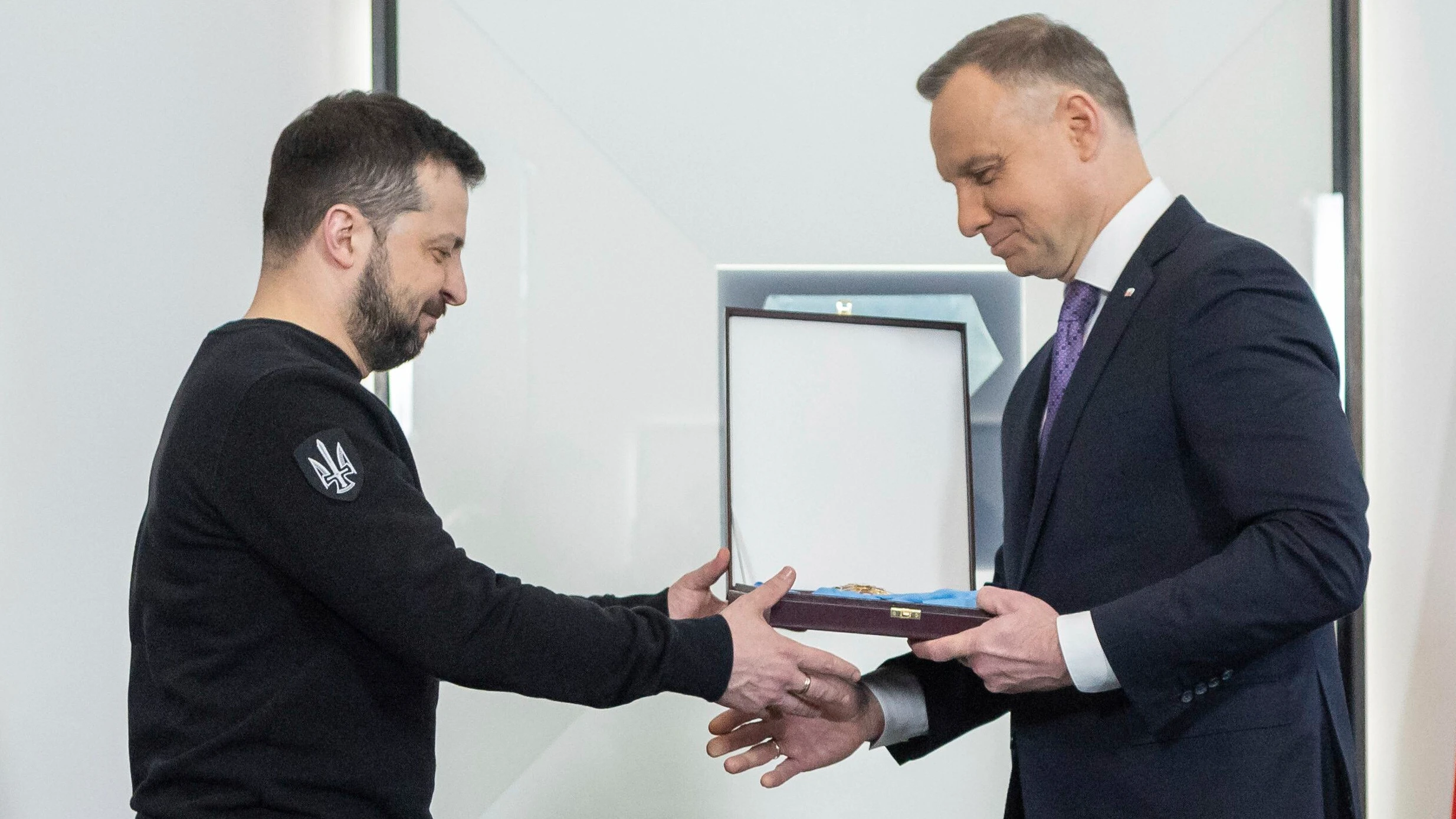
Streit mit Polen: Sogar Widersacher solidarisieren sich mit Selenskyj Mehrere ehemalige Präsidenten senden ihre Orden des Weißen Adlers ebenfalls nach Warschau zurück. Selenskyj warnt vor weiterer Eskalation.
faz · 2 months ago
Mussolini Never Offended Poles the Way Zelensky Did, Polish Official Says
gdeltproject.org · 2 months ago
Zelenskyy accuses Polish president of stoking anti-Ukrainian sentiment Ukrainian President Volodymyr Zelenskyy has accused Polish President Karol Nawrocki of fueling anti-Ukrainian sentiment for political gain ahead of Polands 2027 parliamentary elections. He compared Nawrockis actions to those of former Hungarian leader Viktor Orban, warning that such policies would end badly.
yenisafak · 2 months ago
Drsný spor o vyznamenanie pre Zelenského. Nawrocki hovorí o zločinoch nacionalistov, Kyjev o poľskej politickej hre Poľský prezident Karol Nawrocki odmieta, že spor s Ukrajinou je vnútropolitickou hrou. Tvrdí, že ide o zásadný konflikt o výklad dejín a historických symbolov.
aktuality.sk · 2 months ago
Vztahy Ukrajiny a Polska jsou nejhorší za dekády. Řád odebraný Zelenskému je jen špičkou ledovce Polský prezident Karol Nawrocki v pátek rozhodl o odebrání Řádu bílé orlice Volodymyru Zelenskému. Jde o nejvyšší státní vyznamenání, které ukrajinský prezident dostal v roce 2023 od předchozí polské hlavy státu Andrzeje Dudy. Je to důsledek pobouření, které v Polsku vyvolalo to, že Zelenskyj pojmenoval elitní jednotku ukrajinské armády – Samostatné centrum speciálních operací Sever – po „hrdinech UPA.
denik n · 2 months ago
Mediul de afaceri din Polonia cere detensionarea relațiilor dintre Varșovia și Kiev Organizațiile patronale poloneze solicită liderilor din Polonia și Ucraina să pună capăt schimbului de acuzații publice și să revină la dialog, avertizând că actuala dispută politică riscă să afecteze interesele economice ale ambelor țări.
adevarul · 2 months ago

Przydacz: Ukraina wycofała się z daty spotkania Nawrockiego i Zełenskiego. "Nie była zainteresowana" Prezydencki minister Marcin Przydacz powiedział, że strona ukraińska wycofała się z ustalonego spotkania prezydentów Karola Nawrockiego i Wołodymyra Zełenskiego, proponując kolejną "odległą datę". Ocenił, że strona ukraińska "nie była zainteresowana realną dyskusją z polskim prezydentem".
gazeta.pl · 2 months ago
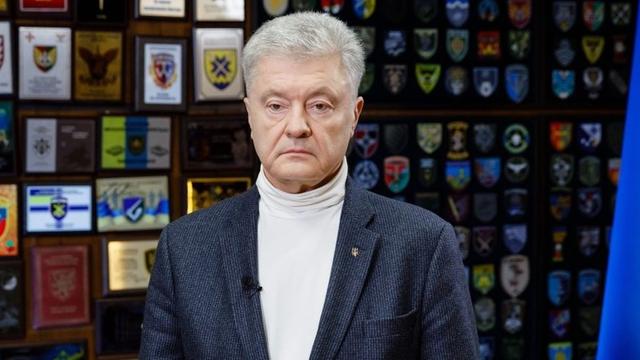
Poroshenko calls for audit of Ukraines policy toward Poland, return to professional diplomacy #UkrainePoroshenko calls for audit of ...
mastodon bot · 2 months ago
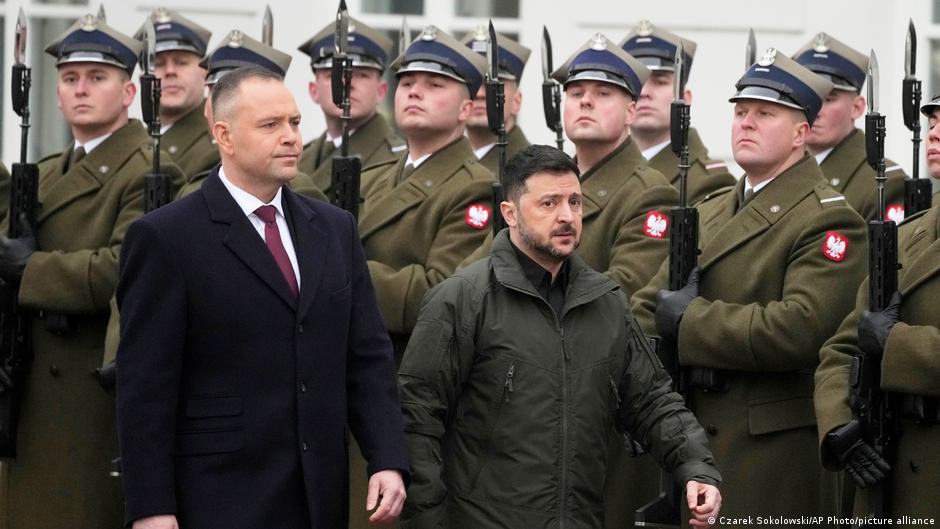
Polen - Ukraine : Die Anti - Putin - Allianz im Geschichtskonflikt
gdelt bot · 2 months ago