
Ukraine strikes Russian airbase and radar sites as civilian casualties surge in 2026

Story Timeline
3 months · 19 summary articles
Ukraine's military has conducted strikes on several Russian military targets, including a MiG-29 fighter jet and a Pantsir-S1 air defense system at Khalino airfield in Russia's Kursk Oblast, according to Ukraine's General Staff on July 21. The operation was carried out by Ukraine's 15th Artillery Reconnaissance Brigade "Black Forest." The strikes aim to weaken Russia's ability to protect military sites from Ukrainian attacks and are part of Ukraine's broader effort to undermine Moscow's capacity to continue its war.
In addition to the strikes on the airfield, Ukrainian forces also targeted several other Russian military sites overnight on July 21. These included a Bussol-S radar station near Khorly in occupied Kherson Oblast, a logistics warehouse near Davydovske in Donetsk Oblast, an ammunition depot in Kundriuche in Luhansk Oblast, and another logistics site near Popovo-Lezhachi in Russia's Kursk Oblast. Russian drone command posts were also hit near Komar in Donetsk Oblast, Kamianske in Zaporizhzhia Oblast, and the village of Zaporizhzhia in Donetsk Oblast.
The United Nations has reported a sharp increase in civilian casualties in both Ukraine and Russia due to intensified air strikes and the use of drones and ballistic missiles. Danielle Bell, head of the UN Human Rights Monitoring Mission in Ukraine, told reporters in Geneva on Tuesday that the unit documented 1,396 civilians killed and 7,978 wounded in Ukraine in the first six months of 2026. This represents a 37% increase from the same period in the previous year and almost double the number documented in 2024.
In Russia, credible open-source reporting indicates that 250 civilians were killed and 1,596 injured in attacks during the first six months of this year, a 121% increase compared to last year. Both Moscow and Kyiv have intensified air strikes in recent months, targeting each other's vital infrastructure. Russia has frequently used ballistic missiles, while Ukraine is currently short of Patriot interceptor munitions, which are crucial for defense against these missiles.
The increase in civilian casualties is largely due to the widespread use of short-range drones and glide bombs in front-line areas, particularly the impact of first-person view (FPV) drones, where the drone operator can see the target in real time. Civilian casualties from short-range drones increased by 65% in the first six months of this year, significantly altering civilian life in front-line communities.
Meanwhile, Ukraine is experiencing a political crisis following the dismissal of Defense Minister Mykhailo Fedorov. Protests have been ongoing for five days, with protesters demanding Fedorov's reinstatement and the removal of Army general Oleksandr Syrsky. Fedorov, who is credited with innovative drone tactics that have given Ukraine new battlefield momentum against the Russian invasion, was dismissed following frequent clashes with Syrsky.
President Volodymyr Zelensky is seeking to defuse the mounting political crisis and restore unity to the country's military. The situation has been further complicated by Russia's intensified attacks near Kupiansk, where the enemy has significantly increased pressure and is attempting to advance toward the city.
In the Kupiansk district, Russian forces are actively breaking through near Kivsharivka and advancing toward Kupiansk-Vuzlovyi, attempting to cut off the Ukrainian bridgehead east of the Oskil River. Ukrainian forces are facing significant resistance and heavy losses but are not being stopped, according to Viktor Tregubov, spokesperson for the Joint Forces Task Force. The situation has also worsened west of the river, specifically in the city of Kupiansk, where Russian forces have intensified their attempts to advance from the north of the city and gain a foothold in its northern districts.
In addition to the military and political developments, there have been several other significant events. A Russian strike on a civilian tanker bound for a Ukrainian port has been condemned by Ukraine's Foreign Minister Andrii Sybiha, who called for increased pressure on Russia. The attack on the tanker, which was carrying dangerous chemicals, resulted in three wounds and has been described as a serious incident by Romania's president.
Furthermore, Kazakhstan has stopped sending oil to a key Russian terminal following Ukrainian tanker attacks, which could remove another 1 million barrels a day from the market. This development comes as European natural gas prices shot to a four-month high due to renewed violence around the Strait of Hormuz, triggering concerns about the feasibility of transporting energy through the world's most vital energy chokepoint.
Ukraines Foreign Minister Andrii Sybiha condemned Russias strike on a civilian tanker bound for a Ukrainian port and thanked Romania for swiftly rescuing the crew.
Follow us for live European news
- 2
- 1
- 1
- 1
- 1
6 further sources not geolocated
Articles

🔴 BREAKINGUN reports steep rise in civilian casualties in Russia-Ukraine warThe United Nations reports a significant increase in civilian casualties in the Russia-Ukraine conflict, attributing the worsening toll to the escalating use of long-range missiles and drones targeting areas far from the front lines.📰 #Military #Geopolitics #GeoWire
mastodon bot · 2 months ago

⚡️ Ukraine strikes Russian fighter jet, air defenses in Kursk Oblast, General staff says. Striking both the fighter jet and the Pantsir-S1 weakens Russias ability to protect military sites from Ukrainian attacks.
bluesky_Kyiv Independent · 2 months ago

Russian attack kills three in Ukraines Zaporizhzhia, officials say reut.rs/4ho3j2b
bluesky_Reuters · 2 months ago

Attack drones struck a Russian MiG-29 and a "Pantsir-S1" air defence system at the "Khalino" airfield in the Kursk Region of the RF.
telegram_WarTranslated · 2 months ago
🇺🇦🇷🇺⚡️ — The Ukrainian Ground Forces 15th Separate Artillery Reconnaissance Brigade "Black Forest" struck a Russian MiG-29 multirole fighter aircraft and a Pantsir-S1 air defense system at Khalino Air Base in Russias Kursk Oblast. @IntelSlava
telegram_Intel Slava · 2 months ago
🇷🇺❌🇺🇦 — The Russian Armed Forces have destroyed a truck, an infantry shelter and a drone operation site of the Ukrainian army in the Donetsk Peoples Republic (DPR), the Russian Defense Ministry reported. @IntelSlava
telegram_Intel Slava · 2 months ago
🇮🇳🇷🇺⚡️ — Indias Ministry of Foreign Affairs summoned a Russian diplomat to express Indias serious concern and unequivocal condemnation of Russias recent attack on a merchant ship off the coast of Ukraine, which killed 10 people, including four Indian crew members. @IntelSlava
telegram_Intel Slava · 2 months ago
🇺🇦🇷🇺⚡️ — Statistics on the effectiveness of Russian missiles and Ukrainian air defense according to the Armed Forces of Ukraine. Ukrainians claim that in 2025, air defense neutralized 29.4 of Russian missiles, and in the first half of this year, that figure is about 15. @IntelSlava
telegram_Intel Slava · 2 months ago
Four Indian citizens killed in Russian strike on ship in Black Sea. Indias Foreign Ministry summons senior Russian diplomat.
telegram_Meduza · 2 months ago
Russians attack multi-storey building in Zaporizhzhia with guided aerial bombs: 3 killed, 13 injured – photos Russian forces have once again dropped guided aerial bombs on Zaporizhzhia, killing three people and injuring 13.
ukrpravda · 2 months ago
Ukraines Special Operations Forces disable 13 railway bridges in occupied territories Ukraines Special Operations Forces (SOF) have struck 13 railway bridges in temporarily occupied territories of Ukraine during June-July.
ukrpravda · 2 months ago
Ukraines foreign minister condemns Russian strike on tanker off Romanias coast, calls for increased pressure on Russia Ukraines Foreign Minister Andrii Sybiha condemned Russias strike on a civilian tanker bound for a Ukrainian port and thanked Romania for swiftly rescuing the crew.
ukrpravda · 2 months ago
Azerbaijani president says Russian and German representatives held secret talks on war in Ukraine Azerbaijani President Ilham Aliyev says former senior German officials and Russian representatives secretly met in Baku on 12-14 July to discuss possible ways of ending Russias war against Ukraine.
ukrpravda · 2 months ago
ISW: Russians fail in new attempts to advance in Sumy region On July 19 and 20, Russian troops carried out limited offensive operations in the northern Sumy region but were unable to break through.
ukrinform · 2 months ago
Russians intensify attacks near Kupiansk; logistics on eastern bank of Oskil River complicated, says Tregubov Russian troops have intensified their attacks in the Kupiansk district of Kharkiv region, suffering heavy losses. Enemy drones are also putting pressure on the Defense Forces logistics on the eastern bank of the Oskil River.
ukrinform · 2 months ago
Romanian president reports attack on tanker off countrys coast; injuries reported A Liberian-flagged vessel traveling from Egypt to Ukraine was struck off the coast of Romania in an attack likely linked to Russias war against Ukraine.
ukrinform · 2 months ago
Defense forces strike MiG-29 and Pantsir-S1 air defense system in Kursk region The Ukrainian Armed Forces struck a MiG-29 fighter jet and a Pantsir-S1 anti-aircraft missile and gun system at the Khalino airfield in the Kursk region.
ukrinform · 2 months ago
Russian forces strike Zaporizhzhia for second time today, setting warehouses ablaze Russian troops have launched a new attack on Zaporizhzhia.
ukrinform · 2 months ago
Aliyev confirms German and Russian representatives met secretly in Baku in mid-July to discuss ending the war in Ukraine #Meduza #Ukraine #Russia #Azerbaijan
mastodon bot · 2 months ago
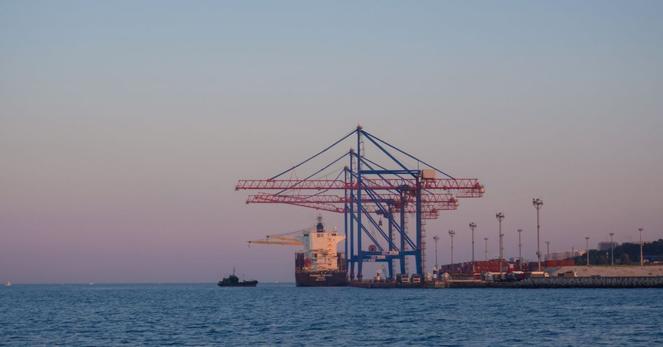
#WW3 #Russia #invasion - Ship Captain Killed In Ship Attack Off #Ukraines Odesa Laid To Rest In Azerbaijans Lankaran - Marine Insight
mastodon bot · 2 months ago
Three wounded in strike on Ukraine-bound LPG tanker off Romania in the Black Sea Romanias president says the attack on the Ukrainian ship carrying dangerous chemicals was most likely the result of a Russian attack, calling it a serious incident and launching a probe to determine its cause.
euronews · 2 months ago
Czech turbine engines for drones to be produced in Ukraine – photos Ukraine will localise production of Czech PBS turbine engines under an agreement between Ukraines Airlogix and Czech company PBS Group
ukrpravda · 2 months ago
Ukrenergo: Russian attacks cause new power outages in five regions As of the morning of July 21, Russian attacks have left users without power in five regions of Ukraine; four settlements are without electricity due to severe weather.
ukrinform · 2 months ago
In Dnipropetrovsk region, Russians struck rescue workers clearing up after attack; three injured In the Dnipropetrovsk region, Russian forces launched repeated strikes on the site where firefighters were working to clear up the aftermath of a previous Russian attack; three rescue workers were injured.
ukrinform · 2 months ago
Russians strike downtown Odesa: Building damaged, three injured On the afternoon of July 21, a residential building in Odesa was damaged as a result of a Russian attack, and three people were injured.
ukrinform · 2 months ago
Russian attack on civilian vehicle in Donetsk region kills two, wounds three In the village of Znamenivka in the Donetsk region, Russian invaders attacked a civilian vehicle, killing two and wounding three civilians.
ukrinform · 2 months ago
FM Sybiha responds to Russian strike near Romania on gas tanker bound for Ukraine Andrii Sybiha, head of Ukraines Ministry of Foreign Affairs, called for tougher sanctions and increased pressure on Russia following its attack on a tanker off the coast of Romania.
ukrinform · 2 months ago
Parade of Fear Since May 2026, Russias war against Ukraine has entered a new phase. Ukrainian long-range drone operations are increasingly reaching targets deep inside Russian territory, following a familiar pattern of war: sooner or later, it returns to the place from which it was launched. Whether these attacks will prove to be a strategic turning point remains unclear. One consequence, however, is already visible. The war is beginning to affect Russias state rituals and commemorative practices. The post Parade of Fear appeared first on Verfassungsblog.
verfassungsblog · 2 months ago
India Summons Russian Envoy Over Killing of 4 Indian Sailors Ukraine said Russia hit a cargo ship with three cruise missiles on Sunday, killing 10 people including four Indian citizens.
themoscowtimes · 2 months ago
Ukraine plunges into political crisis as anger over defence ministers dismissal grows Street protests were held for a fifth day on July 19 in Ukraine, over the firing of Defense Minister Mykhailo Fedorov. Fedorov was dismissed following frequent clashes with top Army general Oleksandr Syrsky, sparking indignation particularly among young Ukrainians, who credit the tech-savvy 35-year old Fedorov with innovative drone tactics that have given Ukraine new battlefield momentum against the Russian invasion. Fedorov has publicly blamed the 60-year-old Syrsky for his ouster. President Volodymyr Zelensky is now seeking to defuse the mounting political crisis and restore unity to the countrys military.
france24 · 2 months ago