Loading…
 Saturday, September 26Saturday, September 26
4 months · 20 summary articles
A breakthrough in the Iran-US war appeared within reach on Friday as Pakistan’s prime minister announced that Washington and Tehran had agreed on a final text to end two months of hostilities, even as fresh fighting erupted near the Strait of Hormuz.
Pakistan’s Prime Minister Shehbaz Sharif confirmed on X that “a final, mutually agreed text of the peace agreement has been reached,” warning that misinformation campaigns threatened to derail the process as Islamabad finalised implementation details . A senior US administration official separately told France 24 that both sides had agreed on a text and Washington expected to sign an initial deal “in the coming days” . US President Donald Trump welcomed a social media post by Iranian Foreign Minister Abbas Araghchi as “very positive,” adding that a deal could be finalised “as early as the weekend” .
Yet the fragile momentum was tested within hours when US Central Command said it had downed multiple Iranian drones targeting commercial vessels near the Strait of Hormuz, the latest in a series of escalations that have kept regional tensions at flashpoint levels . The Strait, through which a fifth of the world’s seaborne oil passes, remains a critical flashpoint; CENTCOM’s statement followed weeks of halting talks mediated by Pakistan .
Diplomatic sources cited by *Libération* said the draft accord envisages a 60-day negotiation period to formalise a ceasefire and open the Strait, with Iran’s uranium stockpile remaining a sticking point . German outlet *Handelsblatt* reported that while a deal now seems tangible, Tehran’s nuclear programme continues to complicate negotiations .
The juxtaposition of diplomatic breakthroughs and renewed military action underscores the fragility of the moment. Pakistan’s mediation, welcomed by both capitals, has provided the clearest signal yet that an end to the conflict is possible—but the Strait of Hormuz remains a powder keg that could yet unravel the process.
Follow us for live European news

Irán afirma que el acuerdo con Estados Unidos se podría firmar en los "próximos días" El ministro iraní de Exteriores, Abás Araqchí, afirmó que Irán podría firmar un memorando de entendimiento con Estados Unidos en "los próximos días", de manera digital y no presencial. Leer
expansion · 3 months ago

+++ Iran-Krieg +++: Iran: Ende der Libanon-Angriffe Teil der Vereinbarung mit den USA US-Militär meldet Abschuss iranischer Drohnen in Straße von Hormus +++ Pakistan: Iran und USA haben sich auf Abkommen geeinigt +++ Israel ordnet Evakuierung im Südlibanon an +++ Der Newsblog.
handelsblatt · 3 months ago
Lage im Überblick: Kommt es zum Iran-Deal? - US-Militär meldet neue Angriffe Ein Abkommen zwischen den USA und dem Iran scheint greifbar. Doch Teherans Atomprogramm bleibt ein Knackpunkt in den Verhandlungen. Und auch die Lage in der Straße von Hormus ist weiter angespannt.
handelsblatt · 3 months ago
Vermittler gibt sich zuversichtlich: Kommt es zum Deal zwischen Iran und der USA? Teherans Atomprogramm bleibt ein Knackpunkt. Auch die Lage in der Straße von Hormus ist weiter angespannt: Das US-Militär meldet neue Angriffe. mehr...
taz.de · 3 months ago

Londe de choc de la guerre en Iran sur léconomie mondiale, en cartes et graphiques Plus de deux mois après la fermeture du détroit dOrmuz, The Economist a réalisé un travail infograhique sur les répercussions économiques à travers la planète. Des pénuries de carburant à la flambée du prix des pistaches, en passant par les conséquences sur les usines produisant des semi-conducteurs.
courrier international · 3 months ago
Annäherung und ein neuerlicher Angriff Die USA und der Iran stehen nach Darstellung beider Seiten sowie des Vermittlers Pakistan kurz vor einem Abkommen zur Beendigung des Krieges. „Wir können bestätigen, dass ein endgültiger, von allen Seiten abgestimmter Text des Friedensabkommens erreicht wurde, schrieb Pakistans Premierminister Shebaz Sharif am Freitag auf X. Doch wenig später meldete das US-Militär neuerlich iranische Angriffe in der Straße von Hormus.
orf.at · 3 months ago
Iran peace deal looms while new military action flares near Strait of Hormuz The United States and Iran signaled on Friday that an agreement to end their war was close, with a senior U.S. administration official saying both sides had agreed on a text and that Washington expects to sign an initial deal in the coming days.
france24 · 3 months ago
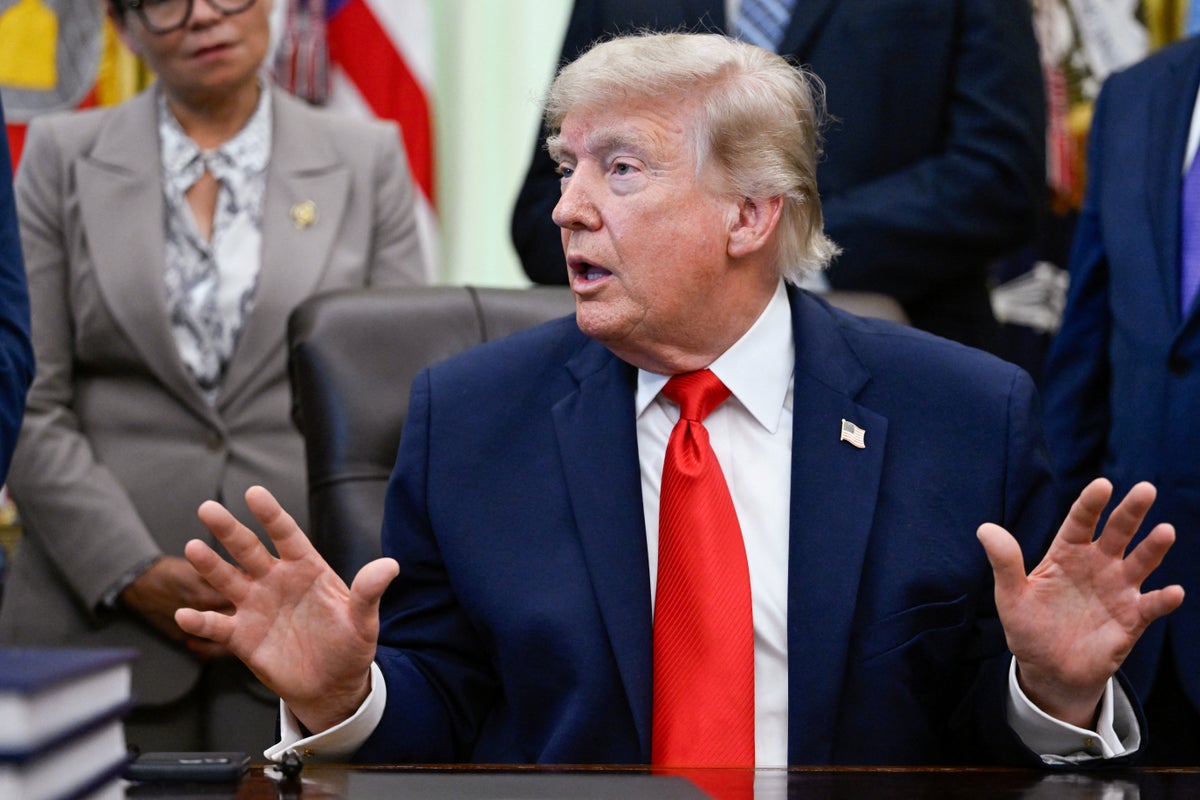
Iran-US war latest: Trump races to seal deal to open Strait of Hormuz and end conflict before G7 summit Peace has never been this close as it is now, Pakistans prime minister says as he claims final text of peace deal has been reached
independent · 3 months ago
Fidan discusses US-Iran talks with Qatari, US officials Turkish Foreign Minister Hakan Fidan on Friday discussed ongoing diplomatic efforts between Washington and Tehran with Qatars prime minister and American negotiators, expressing Ankaras hope for a swift conclusion to the talks and reiterating Türkiyes support for a negotiated settlement.
yenisafak · 3 months ago
Iran accepts performance-based deal requiring major concessions A White House official said Iran has agreed to a "performance-based deal" that would require major concessions before any sanctions relief, including the dismantlement of its nuclear program and guarantees to keep the Strait of Hormuz open, according to Fox News.
yenisafak · 3 months ago
Qatar denies Washington Post report on Iran energy ties Qatars International Media Office on Friday rejected a Washington Post report alleging Doha coordinated energy production decisions with Tehran to influence the ongoing US-Israeli war, describing the claims as "false and completely baseless" attacks originating from parties seeking to undermine regional mediation efforts.
yenisafak · 3 months ago
Iran FM says Islamabad Memorandum with US never closer Iranian Foreign Minister Abbas Araghchi said Friday that the proposed Islamabad Memorandum of Understanding between Tehran and Washington is closer than ever to finalization, urging media outlets to refrain from speculation regarding the pending agreements contents while negotiations continue.
yenisafak · 3 months ago
The Iran dilemma between war and diplomacy The Middle East remains trapped between war and negotiation. The fact that Israel has not ended its attacks on Lebanon appears to have created a need for Iran to show that it is ready to walk away from the table. While the Trump administration struggles to keep Iran at the table, the escalation of mutual attacks has once again highlighted the fundamental contradictions in Washingtons strategy. The Trump administration, unable to bring Iran to its knees by increasing military pressure, tries to
yenisafak · 3 months ago
Trump calls Araghchi post on US-Iran deal very positive US President Donald Trump on Friday welcomed a social media post by Iranian Foreign Minister Abbas Araghchi regarding a potential agreement between Washington and Tehran, calling the message "very positive" while maintaining that a deal could be finalized as early as the weekend.
yenisafak · 3 months ago
Pakistan says US and Iran agree on final text to end war Pakistans Prime Minister Shehbaz Sharif announced on Friday that the United States and Iran have agreed on a "final text" to end their two-month war, warning that misinformation campaigns threaten to derail the progress as Islamabad works to finalize implementation.
yenisafak · 3 months ago
Iran says understandings reached with US on most issues Foreign Ministry spokesman Esmaeil Baghaei said on Friday that Tehran has reached understandings with Washington on the majority of issues under discussion, adding that relevant institutions are conducting final internal reviews of a proposed Islamabad Memorandum of Understanding before determining the countrys definitive position.
yenisafak · 3 months ago
US forces down Iranian drones targeting Hormuz shipping US Central Command said American forces intercepted multiple Iranian drones targeting commercial vessels in the Strait of Hormuz late Friday, confirming that international shipping continues unimpeded.
yenisafak · 3 months ago
Iran war day 106: US and Iran say deal close but Lebanon fighting continues US and Iran say a deal to end the war is close, with a final text agreed but key steps still pending.
aljazeera · 3 months ago
US Downs Iranian Attack Drones, Even As Deal Momentum Builds As the US-Israeli war with Iran continues to impact and shape the region, journalists from RFE/RLs Central Newsroom and Iranian service, Radio Farda, deliver ongoing updates and analysis.
radio free europe · 3 months ago
Trump seeks off-ramp from war in Iran deal As reports emerge of a possible US-Iran agreement, President Donald Trump is looking for an off-ramp from Iran war.
aljazeera · 3 months ago

US downs Iran drones targeting ships in Strait of Hormuz, as both insist deal closer than ever The interception came after weeks of halting talks between Tehran and Washington, mediated by Pakistan.
thejournal · 3 months ago