
US-Iran deal reopens Strait of Hormuz: Mine clearance begins as tanker traffic resumes
Story Timeline
4 months · 20 summary articles
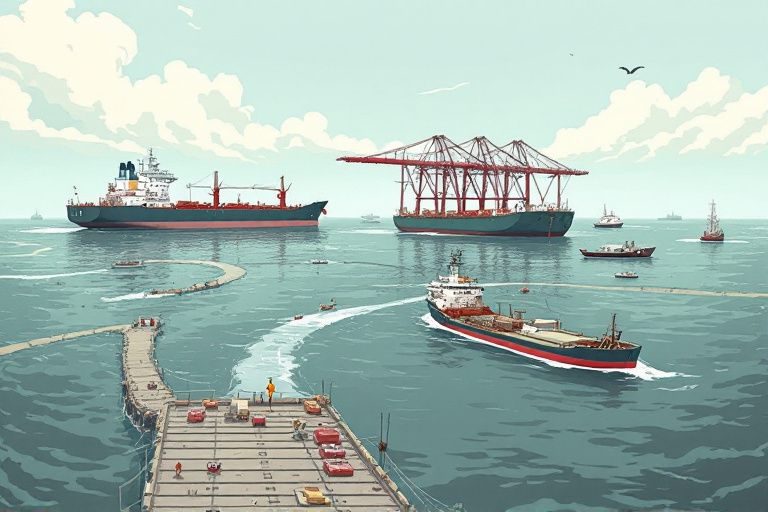
Maritime traffic through the Strait of Hormuz is gradually resuming following a US-Iran agreement to end hostilities and reopen commercial lanes, but industry experts warn that normalcy remains elusive until approximately 80 naval mines are cleared from the main shipping channel.
At least 12 tankers, including Saudi crude carriers, Iranian vessels, and Qatar's first LNG tanker since the war began, have transited the Strait in recent days, signaling a cautious recovery of commercial shipping. Traffic had plummeted over 90% during the conflict, from around 130 ships daily to roughly 10.
The reopening follows a memorandum of understanding between Iran and the United States, signed electronically by Presidents Donald Trump and Masoud Pezeshkian. According to Iran's Supreme National Security Council, traffic through the Strait will be increased gradually under the deal, with no fees charged for 60 days. Mine-clearing measures are expected to follow.
However, the presence of naval mines continues to pose a significant challenge. "Maritime traffic through the Strait of Hormuz will remain severely restricted until approximately 80 naval mines are cleared from the main shipping channel," industry experts warned on Friday.
The gradual reopening has seen a surge in commercial traffic, with 25 ships crossing the Strait in a single day—the highest since June. Among these were four supertankers carrying at least 8 million barrels of crude, mainly from Saudi Arabia and the UAE, bound for Japan, South Korea, Pakistan, Singapore, India, and China.
Despite these developments, there is some confusion about the status of the waterway. The Persian Gulf Strait Authority has announced that ships submitting "compliant transit requests" would be allowed to transit the Strait. However, reports suggest that Iran may have reclosed the waterway, adding to the uncertainty.
The Netherlands has positioned ships and drones in the region for a possible NATO operation in the Strait of Hormuz, reflecting the ongoing tensions and the need for international oversight.
In a positive sign, three Saudi Very Large Crude Carriers (VLCCs), carrying approximately 6 million barrels of crude, have re-emerged on tracking systems after a two-month silence. Two of these vessels are en route to Asian ports, indicating a potential de-escalation in the region.
Additionally, a Japan-linked vessel detained in the Persian Gulf has successfully transited the Strait of Hormuz and is sailing toward Japan, according to Japanese Prime Minister Sanae Takaichi.
The reopening of the Strait of Hormuz is a significant development for global trade, as the waterway is a critical chokepoint for oil and gas shipments. However, the ongoing mine-clearing efforts and the gradual nature of the reopening mean that it could take weeks for traffic to return to even half of prewar levels, with knock-on effects continuing for months.
As the situation continues to evolve, the international community is closely watching the implementation of the US-Iran deal and the efforts to ensure the safe passage of ships through the Strait of Hormuz.
Follow us for live European news
Articles

Noi radare pentru detectarea fenomenelor extreme. ANM anunță în ce zone au fost amplasate Administraţia Naţională de Meteorologie (ANM) anunţă instalarea a şapte radare noi, care detectează şi monitorizează continuu fenomenele extreme. Fiecare poate monitoriza non-stop o zonă geografică circulară cu o rază de până la 230 de kilometri.
digi24 · 3 months ago
„Situația e gravă. Miruță a cerut lămuriri de la Kiev după explozia dronei în Constanța: „Sunt 14 întrebări. Când va veni răspunsul Ministrul interimar al Apărării, Radu Miruţă, a declarat vineri că se aşteaptă să primească pe 23 iunie explicaţiile oficialilor din Ucraina privind incidentul recent din Portul Constanţa, unde a explodat o dronă maritimă. Oficialul român a trimis părţii ucrainene o adresă în care sunt formulate 14 întrebări.
digi24 · 3 months ago
Operațiune secretă atribuită Iranului: Gardienii Revoluţiei ar fi înființat celule secrete în Irak pentru a ataca state din Golf Corpul Gardienilor Revoluţiei din Iran (IRGC) a înfiinţat noi celule secrete în Irak pentru a lansa atacuri asupra ţărilor din Golf care găzduiesc forţe americane, ocolind reţelele de miliţii existente pentru a evita să fie detectate, au indicat surse irakiene citate vineri de Reuters.
digi24 · 3 months ago
Viděli jsme tchajwanské drony, které mají zastavit čínskou invazi Pod neustálým tlakem totalitní Čínské lidové republiky je Tchaj-wan (Čínská republika) nucen modernizovat armádu a připravovat se na případnou konfrontaci. K tomu dnes už neoddělitelně patří i drony.
denik n · 3 months ago
Incêndios: Forças Armadas não terão de aguardar pedidos para agir Novo centro de operações na Base Aérea n.º5, em Monte Real, estará em alerta permanente, utilizando aeronaves para detectar situações de risco de incêndio, adiantou Nuno Melo.
publico · 3 months ago
Borse oggi, 19 giugno. Hormuz riapre, trattative ferme: petrolio sotto 80 dollari. Milano da record Nella prima giornata senza blocco gli Stati Uniti hanno fatto passare dodici navi ma rimangono le incognite sulle trattative
corriere · 3 months ago
SOS Méditerranée: 10 ans dopérations de sauvetage de migrants et des milliers de vies sauvées Lassociation SOS Méditerranée fête ses 10 ans dopérations de sauvetage en mer Méditerranée. Durant la dernière décennie, lONG a secouru plus de 43 000 personnes. Des opérations compliquées dans le contexte politique européen.
rfi.fr · 3 months ago

Whats the State of Play in the Strait of Hormuz? It could take weeks for traffic through the route to return to even half of prewar levels, with knock-on effects continuing for months.
wsj · 3 months ago

Novo volte-face à vista? Em Ormuz, o petróleo já "flui" 25 navios comerciais atravessaram ontem o canal, cinco vezes amis do que a média dos primeiros 10 dias de junho.
observador · 3 months ago

Ormuz. Tráfego atinge nível mais elevado desde abril As operações de remoção de minas no estreito de Ormuz continuam
observador · 3 months ago
Οι Φρουροί της Επανάστασης δημιουργούν μυστικούς πυρήνες στο Ιράκ για να επιτίθενται σε χώρες του Κόλπου Μικρές ομάδες στο Ιράκ με έμπειρα στελέχη και ειδίκευση στα drones, φέρεται να πραγματοποιήσαν επιθέσεις σε χώρες του Κόλπου για λογαριασμό της Τεχεράνης, στη διάρκεια του πολέμου - Γιατί το Ιράν στρέφεται σε αυτή την τακτική
protothema · 3 months ago
Radu Miruță: În Portul Constanța situația de securitate este gravă Ministrul interimar al Transporturilor, Radu Miruță, spune, la două săptămâni de laexplozia unei drone marine ucrainene în Portul Constanța, că „situația de securitate din port este gravă. Miruță a spus, vineri, într-o conferință de presă, că a dat termen 15 zile conducerii Portului Constanța să vină cu un plan „care să fie implementat de urgenţă …
hotnews.ro · 3 months ago
Policie v Evropě rozbila síť teroristů napojených na Islámský stát. Zasahovala i v Česku Policie v sedmi evropských zemích včetně Česka provedla koordinovanou operaci proti aktivitám teroristické organizace Islámský stát-Chorásán. Jde o větev hnutí Islámský stát působící převážně ve Střední Asii. Policisté identifikovali lidi podezřelé z teroristické činnosti pocházející z Čečenska či středoasijských zemí a několik jich pozatýkali, uvedla v pátek evropská policejní agentura Europol. Na akci se podílela americká FBI.
irozhlas.cz · 3 months ago
,xPosition=.5,yPosition=.5;Resize=(1200,675)&impolicy=medium)
Højspændt pressemøde slut: Det ved vi, og det mangler vi svar på I dag er offentligheden blevet præsenteret for et "resume af evaluering af Forsvarets indsats" ved dronehændelserne i efteråret.
dr.dk · 3 months ago

Boris Herrmann hisst mit Steinmeier die Segel Weltumsegler Boris Herrmann macht die Kieler Woche zu seinem Heimspiel und wirbt mit Forschungsschiff und Rennkatamaran für Segelsport und Schutz der Meere – sogar der Bundespräsident steigt mit an Bord.
welt.de · 3 months ago
Strait of Hormuz reopening gradually as tanker traffic resumes after US-Iran deal At least 12 tankers have transited the Strait of Hormuz in recent days, including Saudi crude carriers, Iranian vessels, and Qatars first LNG tanker since the war began—signaling a cautious recovery of commercial shipping following the US-Iran framework agreement. Traffic had plummeted over 90 during the conflict, from around 130 ships daily to roughly 10.
yenisafak · 3 months ago
Iran says Hormuz traffic to be gradually increased under US deal Irans Supreme National Security Council announced that traffic through the Strait of Hormuz will be increased gradually under a memorandum of understanding with the US. No fees will be charged for 60 days, and mine‑clearing measures will follow. The deal, signed electronically by Presidents Trump and Pezeshkian, initiates 60 days of negotiations on nuclear and sanctions issues.
yenisafak · 3 months ago
Turkish ambassador visits frigate TCG Oruçreis at Norfolk Ambassador Sedat Önal visited the Turkish frigate TCG Oruçreis during its port call at Norfolk Naval Station. The vessel is participating in FLEETEX‑250, a multinational exercise marking the 250th anniversary of the US Declaration of Independence, alongside 31 warships and multinational aircraft.
yenisafak · 3 months ago
Hormuz shipping normalcy elusive until mines cleared: Report Maritime traffic through the Strait of Hormuz will remain severely restricted until approximately 80 naval mines are cleared from the main shipping channel, industry experts warned Friday, even as vessels begin transiting the strategic waterway following a US-Iran agreement to end hostilities and reopen commercial lanes.
yenisafak · 3 months ago
Saudi super-tankers reappear after two months of silence Three Saudi Very Large Crude Carriers (VLCCs), carrying approximately 6 million barrels of crude, have re-emerged on tracking systems after a two-month silence. The development signals a potential de-escalation in the Strait of Hormuz following a recent US-Iran understanding, with two vessels en route to Asian ports.
yenisafak · 3 months ago
Japan-linked vessel clears Hormuz as three-month blockade eases Japanese Prime Minister Sanae Takaichi announced Friday that a Japan-linked vessel detained in the Persian Gulf has successfully transited the Strait of Hormuz and is sailing toward Japan, as Tokyo continues diplomatic efforts to secure passage for dozens of remaining ships.
yenisafak · 3 months ago
Hormuz traffic rebounds as 25 ships cross in a day after US-Iran deal Commercial traffic through the Strait of Hormuz surged to 25 ships in a single day — the highest since June — following the US-Iran Islamabad Memorandum. Four supertankers carried at least 8 million barrels of crude, mainly from Saudi Arabia and the UAE, bound for Japan, South Korea, Pakistan, Singapore, India, and China.
yenisafak · 3 months ago
Netherlands positions ships and drones for possible NATO operation in Strait of Hormuz The Dutch frigate Zr.Ms.
nltimes.nl · 3 months ago
Confusion in Strait of Hormuz amid reports Iran has reclosed the waterway The Persian Gulf Strait Authority has announced that ships that submit "compliant transit requests" would be allowed to transit the Strait.
euronews · 3 months ago
🇮🇷🇮🇶❌🇸🇦🇦🇪🇶🇦- IRGC set up covert Iraqi cells to attack Gulf neighbors, says Reuters. ➡️ Multiple Iraqi sources claim that there are secret cells in Iraq that bypass established militia networks to report directly to the IRGC. ➡️ "At least seven drone attacks from desert locations" took place from southern Iraq targeting Kuwait, the UAE, and Saudi Arabia during the conflict.
telegram bot · 3 months ago
Nederland stuurt na mijnenjager ook fregat naar Straat van Hormuz Nederland heeft een fregat richting de Straat van Hormuz gestuurd, meldt defensieminister Dilan Yesilgöz in een brief aan de Tweede Kamer. Daarmee kan het snel worden ingezet bij een mogelijke missie. Yesilgöz benadrukt dat daarover nog geen besluit is genomen.
nu.nl · 3 months ago
Für Angriffe gegen US-Stützpunkte: Irans Revolutionsgarden bauen offenbar geheime Drohnen-Zellen im Irak auf Insider berichten, der Iran würde im Irak Kämpfer für geheime Zellen rekrutieren. Im April und Mai sollen sie mehrere Angriffe gegen die Golfstaaten gestartet haben.
tagesspiegel · 3 months ago