
US pauses Iran airstrikes after 13 days as Oman seeks Strait of Hormuz deal

Story Timeline
2 months · 16 summary articles
The United States has paused its airstrikes on Iran after 13 days of continuous attacks, according to multiple sources. The pause comes as Oman pursues a deal to secure transit through the Strait of Hormuz. Meanwhile, Iran has also halted its retaliatory operations in the Gulf, but has warned that the conflict could expand if the US resumes its attacks.
The decision to pause the strikes follows concerns about dwindling US munitions stockpiles. Vice President JD Vance and Gen. Dan Caine, the chairman of the Joint Chiefs of Staff, both raised concerns about the US munitions stockpile with President Donald Trump during a White House meeting on Friday, a US official told CNN. Operations are “on a hold,” a Department of Defense source told the broadcaster on Saturday.
Despite the pause in US strikes, the conflict has continued to spread. Yemen’s Iran-aligned Houthis attacked Saudi oil installations along the Red Sea coast, and Iran accused Ukraine of targeting one of its vessels in the Caspian Sea. The US military said on Saturday its naval blockade against Iran “remains in full effect” but did not explain why it halted a streak of 13 nights of escalating strikes.
Iran’s Foreign Ministry accused Ukraine of attacking an Iranian commercial vessel in the Caspian Sea, saying one sailor was killed and another injured. The ministry summoned Ukraine’s chargé d’affaires in Tehran to protest over an attack it described as “hostile and criminal,” state news agency IRNA said.
The pause in hostilities comes ahead of a key meeting scheduled in Washington between President Donald Trump and Israeli leader Benjamin Netanyahu on July 28. That visit falls exactly five months since US and Israeli forces launched a wide campaign of air strikes on Iranian targets.
Iran has pushed back, attacking US allies in the Middle East and essentially closing the Strait of Hormuz, the chokepoint waterway through which a massive amount of oil and gas normally passes en route to global markets. In past weeks, Washington declared a partial cease-fire, though prior to July 24, there were nearly two weeks of consecutive US bombardments of Iranian targets.
The lull in US attacks were partly motivated by dwindling US stockpiles for interceptors to shoot down Iranian missiles, which has worried US military planners, according to The New York Times. Vice President JD Vance and General Dan Caine, the chairman of the Joint Chiefs of Staff, both raised concerns about escalation at a White House meeting, CNN reported.
A spokesman for Iran's military warned on July 26 that the war would widen even further if the US chose to restart its attacks. "These attacks continued until two nights ago, but over the past two nights the Americans have stopped their attacks," army spokesman Mohammad Akraminia was quoted by Iran's semiofficial Mehr news agency as saying. "Since... our strategy has essentially been retaliatory, we have also halted our retaliatory operations,” he said.
Speaking at the White House on July 26, Trump said he had not decided whether to return to an all-out operation. He also said Iran faced a choice between a deal and strikes at a "much higher level.”
In addition to concerns about US weapons stockpiles, growing misgivings among US voters could also be weighing on White House war plans.
The conflict has also drawn in other regional players. [Saudi Arabia’s](en.wikipedia.org) vast oil supplies now increasingly depend on a single exit point, the Suez Canal, due to Houthi attacks in the Red Sea and the closure of the Strait of Hormuz.
Meanwhile, Iran’s Foreign Minister Abbas Araghchi and EU foreign policy chief Kaja Kallas discussed regional developments including an alleged Ukrainian strike on an Iranian commercial vessel and mounting tensions in the Strait of Hormuz. Tehran urged a decisive response from the international community to the deadly incident.
The pause in US strikes and Iran’s halt in retaliatory operations have raised hopes for a diplomatic solution, but the situation remains tense. The conflict has already disrupted energy supplies through the Strait of Hormuz and could affect a second major shipping route, reigniting Yemen’s civil war.
The US military has maintained that its forces remain well-equipped. Spokesman Sean Parnell told CNN that "the US military possesses a deep arsenal of capabilities."
Despite the Gulf lull, Saturday’s fighting between Iran’s Houthi allies and Saudi Arabia showed that the war, which has already disrupted energy supplies through the Strait of Hormuz, could affect a second major shipping route and reignite Yemen’s civil war.
Separately, Iran’s Foreign Ministry accused Ukraine of attacking an Iranian commercial vessel in the Caspian Sea, saying one sailor was killed and another injured. The ministry summoned Ukraine’s chargé d’affaires in Tehran to protest over an attack it described as “hostile and criminal,” state news agency IRNA said.
The Iranian denunciation coincided with comments by Ukrainian President Volodymyr Zelenskiy that Kyiv had noted Russia was passing on to Iran its satellite observations in the Middle East, to enable it to direct strikes in the region.
Houthi military spokesperson Yahya Saree said the group struck sites belonging to Saudi state oil company Aramco in the cities of Jizan and Yanbu on Saturday.
Follow us for live European news
Articles

Iran reports progress in Hormuz shipping talks with Oman Iranian Foreign Ministry spokesman Esmaeil Baqaei said deputy foreign ministers held productive talks in Tehran on operational mechanisms for safe passage through the Strait of Hormuz, as technical consultations between the two countries continue.
yenisafak · 2 months ago
US pauses Iran strikes as Oman pursues Hormuz transit deal Neither side launches attacks for second consecutive night as mediators seek to avert return to full-blown war
financial times · 2 months ago
After Strait of Hormuz and Red Sea, has Iran war now reached Caspian Sea? Iran condemns what it calls a hostile and criminal Ukrainian attack on commercial vessel. How will it affect the war?
aljazeera · 2 months ago
Irans army issues warning ahead of Netanyahus US visit Iran says it has stopped retaliatory operations in the Gulf, but warns the war could expand if US strikes continue.
aljazeera · 2 months ago

⚡ NEWSUK Defence Secretary warns Iran against intimidationUK Defence Secretary Wes Streeting states that Britain stands ready to respond to any attacks by Iran against the UK or its allies, warning that Tehrans sabre-rattling should not intimidate the nation.📰 #Military #Diplomacy #Geopolitics #GeoWire
mastodon bot · 2 months ago
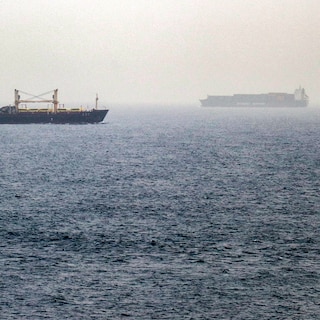
Live - Iran zegt dat het aanvallen heeft opgeschort zolang Amerikaanse offensieven uitblijven • Gesprekken tussen Iran en Oman over Straat van Hormuz
de morgen · 2 months ago
Iran says US violated Hormuz deal to undermine Tehrans authority Iranian Foreign Minister Abbas Araghchi said Washington violated the post-war memorandum of understanding by opening an alternative shipping corridor before the agreed deadline, insisting that Article 5 clearly assigns Tehran sole responsibility for restoring navigation through the strategic Strait of Hormuz.
yenisafak · 2 months ago
Trump halts US strikes on Iran after 13 days: Report President Donald Trump directed the US military to suspend new strikes against Iran on Friday after 13 days of continuous attacks, signaling a potential shift toward diplomacy regarding the Strait of Hormuz blockade while the Pentagon maintains readiness for possible escalation, Axios reported.
yenisafak · 2 months ago
Trump threatens Iran war if we dont get 100 of what we want US President Donald Trump told French news channel LCI on Saturday that he would resume full-scale war with Iran should Washington fail to secure "100 of what we want," as reports emerged that he ordered the Pentagon to halt daily strikes against Tehran after nearly two weeks of continuous operations.
yenisafak · 2 months ago
Iran says it destroyed 11 US warplanes, helicopters in July conflict IRGC spokesman Brig. Gen. Hossein Mohebbi told Tasnim News Agency that Iranian forces destroyed 11 US warplanes and helicopters on the ground during the 15-day conflict from July 8-22, claiming the strikes also wiped out eight "brand new" reconnaissance drones and an F-15 fighter.
yenisafak · 2 months ago
Iranian FM, EUs Kallas discuss Caspian vessel attack, Hormuz tensions Iranian Foreign Minister Abbas Araghchi and EU foreign policy chief Kaja Kallas discussed regional developments including an alleged Ukrainian strike on an Iranian commercial vessel and mounting tensions in the Strait of Hormuz, with Tehran urging a decisive response from the international community to the deadly incident.
yenisafak · 2 months ago
Trump pauses Iran escalation over dwindling missile stocks: Report US President Donald Trump has paused plans for a major military escalation against Iran following warnings from senior Pentagon officials that air defense missile stocks have dwindled to dangerous levels needed to protect American bases across the Middle East, according to the New York Times.
yenisafak · 2 months ago
Iran droht USA mit Ausweitung des Konflikts
orf.at · 2 months ago
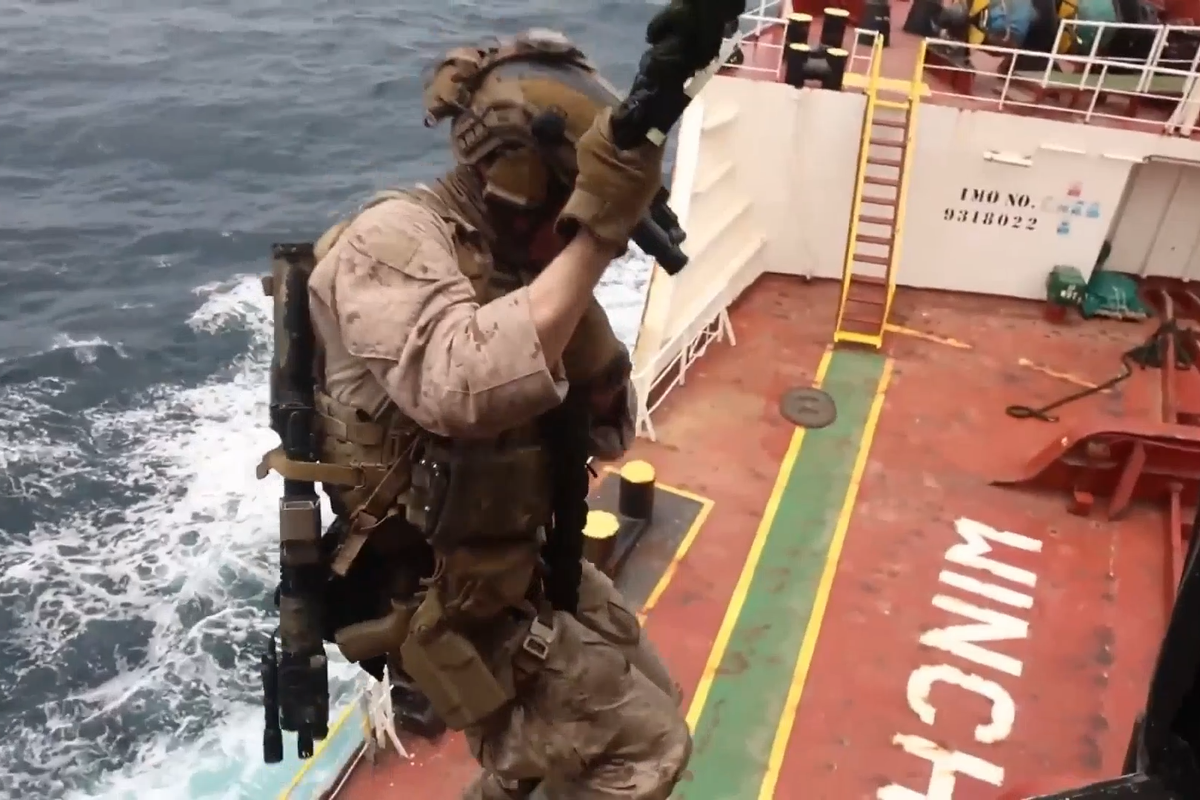
Dramatic footage shows U.S. forces boarding commercial tanker amid Iran blockade The US has released new footage of forces boarding a commercial tanker in Iran as the blockade continues.
independent · 2 months ago
Iran Says It Has Halted Attacks On Washingtons Allies, As US Pauses Bombardment Tehran said it had halted retaliatory attacks against US allies in the Middle East as Washington refrained from attacking Iran for the second night in a row.
radio free europe · 2 months ago

🇺🇸 Iran passed another night without US airstrikes on Sunday, as Washington paused a war nearing its fifth month and reports emerged that concerns over dwindling munitions were restraining plans for further escalation. ➡️ u.afp.com/SrXD
bluesky_AFP English · 2 months ago
Iran war spreads to Red Sea and Caspian, Gulf quiet as US forgoes strikes The Iran war broadened over the weekend despite a pause in U.S. strikes, as Yemens Iran-aligned Houthis attacked Saudi oil installations along the Red Sea coast and Iran accused Ukraine of targeting one of its vessels in the Caspian Sea. The U.S. military said on Saturday its naval blockade against Iran remains in full effect […]
in-cyprus · 2 months ago
Le scorte di intercettori antimissile Patriot sono a rischio e lescalation militare Usa in Iran finisce in stallo Lescalation militare in Iran, almeno per il momento, non ci sarà. È questa la conclusione cui è giunto Donald Trump dopo un incontro con i responsabili del Pentagono venerdì pomeriggio alla Casa Bianca. Il presidente sarebbe arrivato a questa conclusione dopo che i militari lhanno avvertito che lintensificarsi del conflitto avrebbe ulteriormente ridotto le già […] Larticolo Le scorte di intercettori antimissile Patriot sono a rischio e lescalation militare Usa in Iran finisce in stallo proviene da Il Fatto Quotidiano.
il fatto quotidiano · 2 months ago
Ukraine strikes Russian Iran-bound cargo as Iran war widens Ukraine says it has struck long-range routes moving Russian military equipment linked to Iran, while Zelensky claims Moscow gave Tehran satellite data for attacks on US sites in the Middle East.
euronews · 2 months ago

So essentially after escalating a bit, Trump is backing down again, making the US more weak then ever. All because of the unnecessary war Trump started. Iran will make the coming negotiations/talks as long as possible, get maximum concessions and humiliate Trump in the process. #USA #geopolitics #war #trump
mastodon bot · 2 months ago
Coliziune directă între Ucraina și Iran: Forțele ucrainene au lovit o navă iraniană în Marea Caspică Ministerul iranian de Externe a declarat că un atac ucrainean asupra unei nave comerciale iraniene în Marea Caspică, la primele ore ale zilei de sâmbătă, a provocat o explozie în urma căreia un marinar a murit, iar altul a fost rănit.
adevarul · 2 months ago
Anti-war protesters demand end to US use of UK airbase to strike Iran Anti-war activists have protested outside a UK airbase over US forces using it to bomb Iran
aljazeera · 2 months ago
Houthis target Saudi tankers 🇾🇪 Yemens Houthis launched missile and drone attacks on two Saudi oil tankers, claiming the strikes hit their targets. The group said the vessels had violated its maritime blockade.
yenisafak · 2 months ago
Iraq denies report on ceasefire mediation between US and Iran Iraq has denied a media report claiming Baghdad was mediating a US-Iran ceasefire, describing the claims as baseless. The report said Iraqi Prime Minister Ali al-Zaidi had conveyed a proposal during a visit to Tehran.
yenisafak · 2 months ago
Iran says drone strikes hit US bases in Kuwait Irans Islamic Revolutionary Guard Corps said Friday that "super-heavy" drones targeted the US-used Ali Al Salem Air Base in Kuwait, claiming the strike destroyed an ammunition depot and housing facilities while leaving a large number of American personnel dead or injured.
yenisafak · 2 months ago
Iran warns civilians to avoid covert US troop sites Irans Islamic Revolutionary Guard Corps on Friday urged residents of countries hosting American forces to remain at least 500 meters away from buildings allegedly used as covert accommodation by US troops, warning that Washington was targeting civilian infrastructure including bridges and railways.
yenisafak · 2 months ago
Trump says Iran most serious in talks but hasnt decided on major strikes President Donald Trump has said Iran is showing its strongest commitment yet in negotiations, but he has not decided whether to launch major military strikes. He warned that the US is "locked and loaded" if military action becomes necessary.
yenisafak · 2 months ago
+++ Iran-Krieg +++: Irans Revolutionsgarden stoppen Schiffe in der Straße von Hormus Huthi-Miliz reklamiert Angriffe auf Saudi-Ölanlagen für sich +++ Selenskyj: Russland stellt Iran Satellitenbeobachtungen zur Verfügung+++ Iran verurteilt ukrainischen Angriff auf Frachter +++ Der Newsblog.
handelsblatt · 2 months ago
Iran zegt vergeldingsaanvallen in Midden-Oosten te staken Iran bevestigt dat het is gestopt met vergeldingsaanvallen op landen in het Midden-Oosten waar de Verenigde Staten troepen hebben gelegerd. De aanleiding is dat de VS sinds vrijdag na ongeveer twee weken het bombarderen van Iran heeft gestaakt.
nu.nl · 2 months ago
Pakistan, Qatar intensify US-Iran talks after Trump orders pause Pakistani and Qatari mediators have intensified diplomatic channels between Washington and Tehran after President Donald Trump ordered a "pause" in the two-week bombing campaign, as both sides exchanged responses to a joint formula urging a return to pre-July 9 positions to resume stalled negotiations toward a permanent peace agreement.
yenisafak · 2 months ago