Loading…
 Saturday, September 26Saturday, September 26
4 months · 27 summary articles
Portugal on Wednesday opened fast-track permitting zones for wind and solar projects as part of a broader push to accelerate renewable energy deployment and meet EU climate targets. The government designated priority areas where environmental assessments and licensing will be streamlined, a move announced on 17 June 2026 .
The initiative follows a €77.8 million funding package secured by Finnish biotech firm Solar Foods to expand Factory 02, which will produce carbon-neutral protein using solar-powered fermentation . The grant and loan financing—comprising €39.6 million in grants and €38.1 million in recoverable advances—will enable the construction of a facility capable of producing 1,000 tonnes of protein annually, a scale intended to undercut conventional agricultural emissions.
In parallel, Estonia inaugurated the country’s largest biogas plant in Pärnu County, converting bio-waste and cow manure into renewable gas. Infortar, the investment firm behind the project, estimates the facility will process 100,000 tonnes of organic waste annually, generating enough energy to supply 5,000 households .
The European offshore wind sector continued to expand, supporting 180,000 jobs in 2025, according to a study cited by Windtech International . Germany’s 50Hertz grid operator awarded Siemens Energy and Norwegian supplier NSORe a contract to supply offshore converter stations, a €300 million deal aimed at integrating North Sea wind farms into the grid .
Yet the transition faces resistance. In the Netherlands, plans to dissolve the village of Moerdijk to accommodate a major energy hub were scaled back after local opposition, with original proposals twice as large as the eventual compromise . Alpine conservation groups in Austria and Germany demanded an end to further energy and tourism infrastructure in the mountains, arguing that unchecked development threatens fragile ecosystems .
Meanwhile, EU auditors highlighted the scale of climate damages linked to fossil fuel production. A report noted that emissions from oil and gas produced by TotalEnergies, Eni, and Repsol accounted for €1.1 trillion of the €1.5 trillion in climate-related costs across the bloc, while EU companies plan to spend €124 billion on new oil and gas projects over the next decade . Fossil fuel firms earned €82 billion in post-tax profits from EU operations in 2023, a 33% climate tax on which could have raised €27 billion for climate mitigation.
Portugal’s fast-track zones signal a strategic pivot toward renewables, but the pace of deployment will depend on balancing industrial ambition with environmental and social constraints.
Follow us for live European news
3 further sources not geolocated

50Hertz awards Siemens Energy, NSORe offshore converter contract reut.rs/3Sep0aC
bluesky bot · 3 months ago

Portugal to offer fast-track areas for wind, solar projects reut.rs/4vPaW5S
bluesky bot · 3 months ago

Krank durch Windräder – Das ist wirklich dran an den Vorwürfen Kopfschmerzen, Schlafprobleme, Stress: Skeptiker warnen seit Jahren vor den vermeintlichen Risiken von Windrädern. Nun haben Forscher Langzeitdaten ausgewertet – mit eindeutigem Ergebnis.
welt.de · 3 months ago

Ökobilanz von Rechenzentren: Europas Rechenzentren sind klimafreundlicher als US-Pendants Wo werden Rechenzentren mit fossilem Strom betrieben, wo mit saubererem? Eine neue Studie bringt Licht ins Dunkel. mehr...
taz.de · 3 months ago
Havvind: Ber om ett års utsettelse For to år siden vant Ventyr Norges første havvindauksjon. Nå har de bedt om å få utsette konsesjonssøknaden med ett år.
aftenposten · 3 months ago
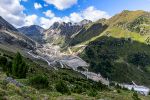
"Genug gebaut": Alpenvereine fordern das Ende der Alpenerschließung Breite Allianz fordert mehr Verantwortung bei Energie- und Tourismusprojekten im Hochgebirge. Die alpine Natur müsse erhalten bleiben
der standard · 3 months ago
Inflație de oferte pentru noul drum expres care va lega Aeroportul Henri Coandă de Autostrada A0 Compania Națională de Investiții Rutiere (CNIR) a anunțat că a primit 15 oferte pentru proiectarea și execuția viitorului drum expres care va conecta Aeroportul Internațional Henri Coandă la Autostrada de Centură A0 a Bucureștiului.
adevarul · 3 months ago

Solar Foods wins €77.8M funding package for Factory 02 expansion Solar Foods has secured €77.8 million in grant and loan financing to support the construction and commissioning of Factory 02. The funding package comprises a €39.6 million grant and a €38.1 million R...
tech.eu · 3 months ago
Dissolving Moerdijk village was already a compromise; Original plans twice as large The plans for a major energy project that would result in the village of Moerdijk be
nltimes.nl · 3 months ago
Windtech International - European offshore wind supported 180,000 jobs in 2025, study finds
gdeltproject.org · 3 months ago
Infortar opens Estonias largest biogas plant in Pärnu County Investment firm Infortar has opened Estonias largest renewable gas plant next to the Halinga dairy farm in Pärnu County, where gas is produced from bio-waste and cow manure.
news.err · 3 months ago
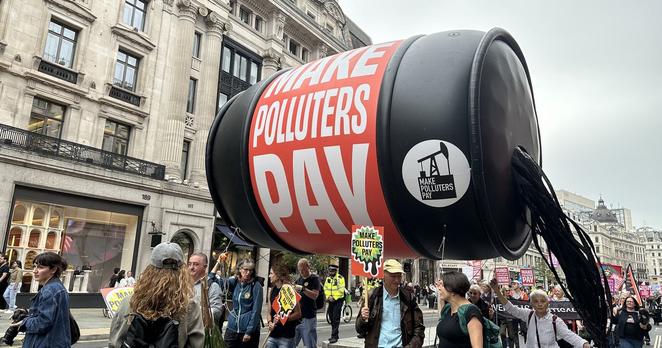
#EUEmissions from oil and gas produced by TotalEnergies, Eni and Repsol account for €1.1 trillion of the €1.5 trillion climate damages costEU companies are forecast to spend €124 billion on new oil and gas production projects over the next 10 yearsFossil fuel companies made an estimated €82 billion in post-tax profits from their EU operations in 2023. A 33 climate tax on the industrys profits would have raised €27 billion to fund climate action that year
mastodon bot · 3 months ago

Big Tech-backed coalition for carbon removal increases funding by $915 million, adds Anthropic reut.rs/4aWPyDF
bluesky bot · 3 months ago
Flugverkehr: Qantas will London erstes Ziel für längste Nonstop-Flüge machen Die Flüge sind Teil des Projekts „Sunrise", in dessen Rahmen später auch New York nonstop angeflogen werden soll. Das Projekt ist für Qantas mit Investitionen in Milliardenhöhe verbunden.
handelsblatt · 3 months ago
Kritik an VW-Klimaprojekt in Tansania: Volkswagen lässt die Massai-Herden schneller rotieren Die Krise des Autobauers ist Thema der VW-Hauptversammlung. Sie zeigt sich auch an einem Kohlenstoffprojekt in Tansania – wenn auch anders. mehr...
taz.de · 3 months ago
:format(jpg)/f.elconfidencial.com%2Foriginal%2F7ae%2F29e%2F35b%2F7ae29e35b41c25af07675fc3956b0f0f.jpg)
Catalá quiere transformar la fachada marítima de Valencia con un plan de la Patacona al Turia La alcaldesa anuncia en el Fórum Europa que el viernes arrancará la tramitación del proyecto de renovación litoral, de cinco kilómetros de longitud, sin concretar cifras de inversión
el confidencial · 3 months ago
Energie: Milliardenauftrag für Windstrom-Plattform geht nach Rostock
die zeit · 3 months ago